
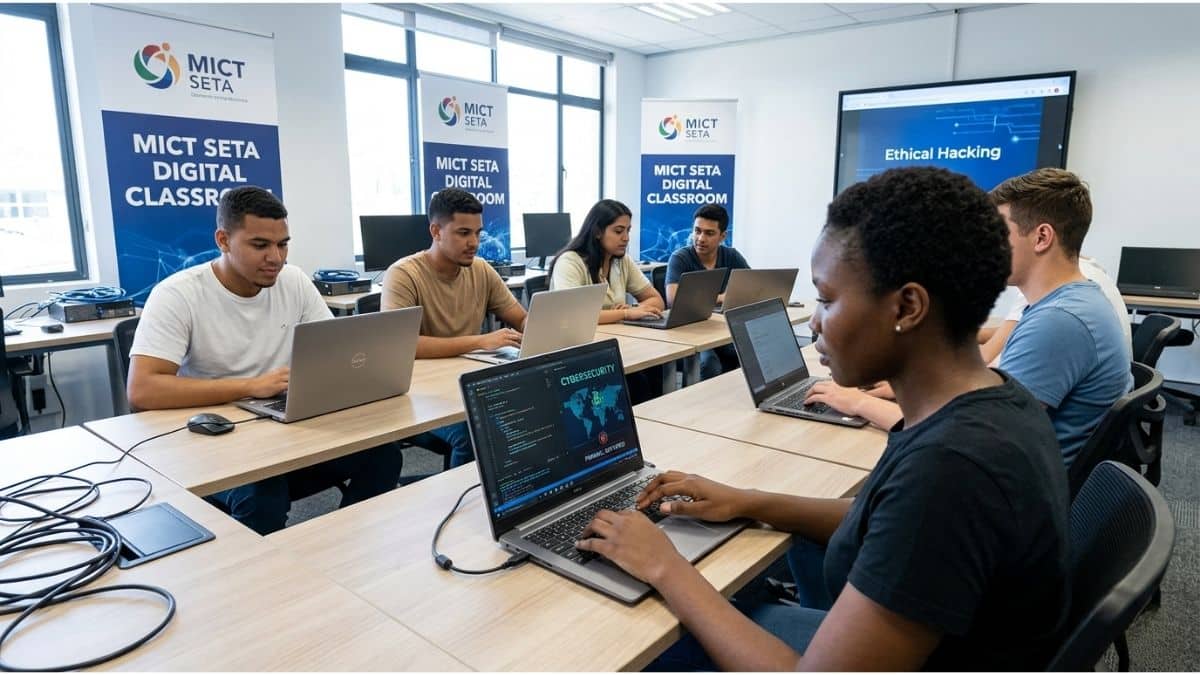
Apply for the Dynamic DNA and MICT SETA Information Technology: Systems Support NQF Level 5 Learnership Programme 2026. Unemployed South African IT graduates with Networking as a major can apply before 03 July 2026.
Kick-Start Your IT Career with the Dynamic DNA and MICT SETA Systems Support Learnership Programme 2026
Dynamic DNA, in partnership with the Media, Information and Communication Technologies Sector Education and Training Authority (MICT SETA), is inviting unemployed South African youth to apply for the Information Technology: Systems Support Learnership Programme 2026.
This opportunity is specifically designed for young IT graduates who have specialised in Networking and are looking to gain industry-relevant skills and improve their employability in South Africa’s growing ICT sector.
For many graduates, securing employment can be difficult without practical experience. This learnership aims to bridge that gap by providing structured training that combines technical knowledge with workplace readiness.
If you recently completed an Information Technology qualification and are passionate about networking and systems support, this programme could be the ideal next step in your career journey.
About Dynamic DNA
Dynamic DNA is a skills development and training provider that focuses on empowering young South Africans through industry-relevant learning opportunities.
Working in partnership with organisations such as MICT SETA, Dynamic DNA provides programmes that equip participants with practical skills needed to succeed in today’s competitive job market.
The organisation is committed to helping unemployed youth gain valuable experience and qualifications that enhance career prospects.
Learnership Programme Details
Programme Provider: Dynamic DNA
Partner: MICT SETA
Programme: Information Technology: Systems Support Learnership Programme
Qualification: Information Technology: Systems Support
NQF Level: 5
Location: Randburg, Gauteng
Closing Date: 03 July 2026
About the Systems Support Learnership
The Information Technology: Systems Support Learnership has been developed to prepare graduates for technical support and infrastructure-related roles within the ICT industry.
The programme focuses on equipping learners with both theoretical knowledge and practical competencies required in modern IT environments.
Successful participants will strengthen their understanding of systems support while improving workplace readiness and technical capabilities.
This opportunity is particularly beneficial for graduates who want to pursue careers in technical support, networking, systems administration, and infrastructure management.
Minimum Requirements
Applicants must meet the following requirements:
Fresh listings:






- Must have completed a three-year Information Technology qualification.
- Networking must have been the major subject.
- Must be unemployed.
- Must be a South African citizen.
- Must be younger than 30 years old.
- Must live close to Randburg.
- Must not currently be participating in another SETA-funded programme.
Applicants who do not meet all the requirements may not be considered.
Why Networking Graduates Are Highly Sought After
Networking remains one of the most important specialisations within the Information Technology industry.
Organisations across all sectors rely heavily on stable, secure, and efficient network infrastructure to support daily operations.
As technology continues to evolve, employers increasingly require professionals who understand networking principles and can provide effective technical support.
Networking graduates are often required to work with:
- Network installation and configuration
- Router and switch management
- Wireless networking
- Network troubleshooting
- Server administration
- Infrastructure support
- System maintenance
- Cybersecurity fundamentals
Developing practical systems support skills can significantly improve career opportunities for IT graduates.
Skills You May Develop During the Programme
Although the complete curriculum has not been specified, Systems Support programmes at NQF Level 5 typically include exposure to:
- Computer hardware maintenance
- Operating systems support
- Windows administration
- Linux fundamentals
- Networking principles
- TCP/IP configuration
- Technical troubleshooting
- Help Desk support
- Network security basics
- IT documentation
- Customer service
- Workplace communication
- ICT best practices
These skills are valuable across many industries and sectors.
Potential Career Opportunities
After completing the programme, learners may pursue career opportunities such as:
- IT Support Technician
- Desktop Support Technician
- Help Desk Technician
- Systems Support Officer
- Network Support Technician
- ICT Technician
- Junior Systems Administrator
- Technical Support Consultant
- Infrastructure Support Technician
- Field Service Technician
With additional certifications and work experience, professionals may later specialise in areas including:
- Cybersecurity
- Cloud Computing
- Network Engineering
- Systems Engineering
- Microsoft Technologies
- Linux Administration
Why This Learnership Is Worth Considering
One of the biggest challenges facing graduates is the lack of practical workplace experience.
Many employers prefer candidates who possess both qualifications and hands-on exposure.
Participating in this learnership can help graduates:
- Improve employability.
- Strengthen practical IT skills.
- Build workplace confidence.
- Gain industry-relevant knowledge.
- Demonstrate commitment to professional growth.
- Enhance technical competence.
For unemployed graduates, this type of structured learning opportunity can provide a valuable foundation for future employment.
Who Should Apply?
This programme is suitable for individuals who:
- Recently completed an IT qualification.
- Specialised in Networking.
- Are currently unemployed.
- Want to build practical ICT skills.
- Are interested in technical support careers.
- Live close to Randburg.
- Are under the age of 30.
- Are not currently participating in another SETA-funded programme.
Documents to Prepare
Before applying, applicants should ensure they have the following documents ready:
- Updated Curriculum Vitae (CV)
- Certified copy of South African ID
- Certified copy of IT qualification
- Academic transcript, where applicable
- Proof of residence, if requested
- Any additional supporting documents required during the application process
Ensuring that all documentation is complete and up to date can improve the quality of an application.
How to Improve Your Application
Competition for ICT learnership opportunities can be high.
Applicants can strengthen their applications by:
- Creating a professional and well-structured CV.
- Highlighting networking modules completed during studies.
- Including technical skills and software knowledge.
- Listing relevant projects completed during studies.
- Mentioning industry certifications such as Cisco, Microsoft, or CompTIA certifications, if applicable.
- Demonstrating enthusiasm for Information Technology.
- Following all application instructions carefully.
Submitting a complete application before the deadline can also improve your chances of being considered.
How to Apply
Interested candidates should submit their applications through the official application platform provided by Dynamic DNA.
Applicants are encouraged to carefully review all requirements and ensure that all supporting documents are attached before submitting their applications.
Final Thoughts
The Dynamic DNA and MICT SETA Information Technology: Systems Support Learnership Programme 2026 offers unemployed IT graduates an excellent opportunity to strengthen their technical skills and gain industry-relevant knowledge.
For graduates who specialised in Networking and want to establish careers in systems support, technical support, or network administration, this programme can serve as an important stepping stone into the ICT industry.
Eligible candidates are encouraged to submit their applications before the closing date to avoid missing out on this valuable opportunity.