
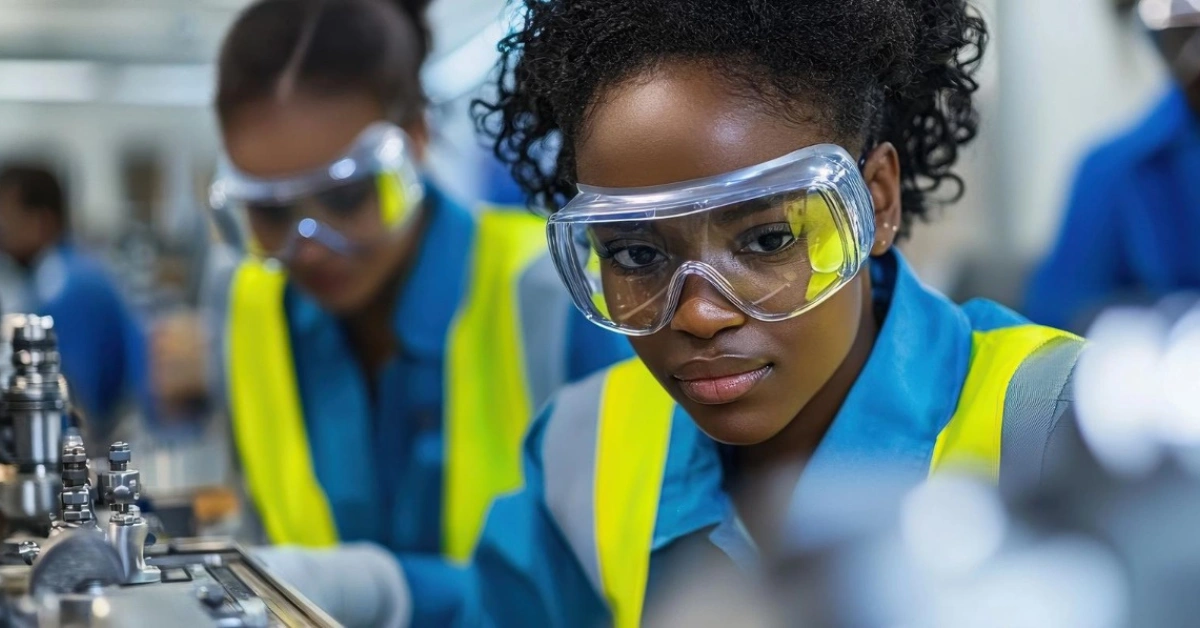
South Africa’s manufacturing sector continues to create important opportunities for young people who want practical technical careers. The PG Group Tool Fabricator Training Programme 2026 offers aspiring artisans and technically minded candidates the chance to gain hands-on exposure inside one of the country’s leading automotive glass manufacturing environments.
Offered through PG Group and its automotive glass division Shatterprufe, this training opportunity focuses on developing fabrication, welding, tooling, and manufacturing support skills within a real industrial setting.
For candidates interested in metal work, engineering environments, toolmaking, and production support, this programme could become a valuable starting point toward a long-term technical career.
What Is the PG Group Tool Fabricator Training Programme 2026?
The PG Group Tool Fabricator Training Programme is designed to develop practical fabrication and manufacturing skills through workplace exposure.
Tool fabricators play an important role in industrial production because they help create, repair, assemble, and maintain tooling used during manufacturing processes.
Within automotive glass manufacturing, specialised moulds and fabrication tools are essential for producing high-quality safety glass products used across the motor industry.
This programme gives participants exposure to:
- Tool fabrication processes
- Metal cutting and shaping
- Welding techniques
- Engineering drawing interpretation
- Tool assembly
- Precision measurements
- Manufacturing quality standards
- Production support activities
- New product development support
The experience gained during the programme can help candidates build technical skills valued across manufacturing, engineering, and industrial environments.
What Does a Tool Fabricator Do?
Many people hear the term “tool fabricator” without fully understanding the role.
A tool fabricator creates and assembles tools, moulds, fixtures, and components used in manufacturing operations.
These tools help production teams manufacture products accurately and consistently.
Interpreting Technical Drawings
Before fabrication starts, tool fabricators must understand engineering specifications correctly.
This includes:
- Reading engineering drawings
- Understanding dimensions
- Identifying material requirements
- Working with templates
- Using reference samples
Strong interpretation skills help prevent costly production mistakes.
Metal Cutting and Shaping
Tool fabricators prepare raw materials for manufacturing use.
This may involve:
- Cutting sheet metal
- Grinding surfaces
- Trimming components
- Bending materials
- Preparing sections for assembly
Accuracy is extremely important because even small errors can affect production quality.
Welding and Assembly
Fabricators often use welding methods to assemble tooling and structures.
Tasks may include:
- Welding metal components
- Bolting assemblies together
- Aligning fabricated parts
- Verifying structural strength
- Inspecting welding quality
This practical work forms a major part of manufacturing operations.
Fresh listings:






Producing New Moulds
The programme also supports New Product Development activities.
This may involve:
- Fabricating prototype moulds
- Testing tooling against fixtures
- Verifying dimensions
- Supporting production improvements
This gives learners exposure to how manufacturing innovation happens inside industrial environments.
Quality Verification
Precision manufacturing depends heavily on measurement accuracy.
Participants may help verify:
- Dimensional accuracy
- Product tolerances
- Assembly integrity
- Manufacturing specifications
- Quality compliance standards
This helps ensure products meet operational and safety requirements.
Main Responsibilities During the Programme
Successful candidates may assist with several operational activities.
Raw Material Preparation
This may include:
- Selecting appropriate materials
- Measuring metal sections accurately
- Preparing fabrication components
- Organising tooling materials
Tool Construction
Participants may support:
- Tool fabrication
- Fixture construction
- Mould production
- Production tooling assembly
Assembly Activities
Daily activities may involve:
- Drilling components
- Welding assemblies
- Bolting structures
- Aligning fabricated parts
- Checking dimensions
Production Support
Learners may also assist manufacturing teams by:
- Delivering tooling to production areas
- Supporting operational requirements
- Assisting with manufacturing processes
- Meeting quality targets
Product Development Support
Participants may gain exposure to:
- Prototype tooling development
- Engineering support projects
- New product introductions
- Manufacturing improvement activities
Minimum Requirements
Applicants should carefully review the programme requirements before applying.
Educational Requirements
Candidates must have:
- Grade 12 (Matric)
Although additional engineering qualifications are not mandatory, technical school subjects may provide an advantage.
Helpful technical subjects include:
- Engineering Graphics and Design (EGD)
- Mathematics
- Technical Mathematics
- Physical Sciences
- Mechanical Technology
Knowledge Areas Required
The programme highlights certain technical knowledge areas.
Size Tolerance Knowledge
Tolerance refers to acceptable measurement variations during manufacturing.
Understanding tolerances helps support:
- Accurate production
- Correct component fitment
- Manufacturing consistency
- Reduced defects
Geometric Tolerancing
Geometric tolerancing focuses on acceptable variations in shape and positioning.
This knowledge is important in technical manufacturing environments where precision matters daily.
Skills Required for the Programme
PG Group is looking for candidates with strong technical potential and practical ability.
Sheet Metal Work
This includes skills such as:
- Cutting
- Folding
- Forming
- Bending metal components
Welding Skills
Tool fabrication frequently involves welding operations.
Common methods may include:
- MIG welding
- TIG welding
- Arc welding
Mechanical Skills
Candidates should demonstrate:
- Mechanical understanding
- Problem-solving ability
- Equipment familiarity
- Tool-handling competence
Attention to Detail
Manufacturing requires high levels of accuracy.
Even small measurement mistakes can create major production problems.
For this reason, attention to detail is one of the most important qualities for technical roles.
Is Experience Required?
The programme states that the following experience is desirable:
- Approximately 2 years of working experience
- Fabrication-related exposure
However, this is not listed as mandatory.
This means recent matriculants and technically minded school leavers may still be considered if they show strong potential and interest in fabrication work.
Applicants without formal experience should still apply if they have technical aptitude and relevant school subjects.
Why This Programme Matters
South Africa continues to face a shortage of skilled artisans and technical workers.
Programmes like the PG Group Tool Fabricator Training Programme help young people gain practical workplace exposure while building technical capabilities that can support long-term career growth.
Fabrication, tooling, welding, and manufacturing support skills remain important across industries such as:
- Automotive manufacturing
- Engineering
- Industrial production
- Metal fabrication
- Technical maintenance
- Toolmaking
This type of experience can help candidates move toward future artisan development opportunities.
How Applicants Can Strengthen Their CV
Applicants should make their technical strengths easy to identify.
A strong application should include:
- Technical school subjects
- Workshop exposure
- Mechanical interests
- Welding or fabrication exposure
- Practical projects
- Attention to detail
- Problem-solving ability
Even school-based technical projects can help strengthen an application.
Edupstairs Insider Tip
Do not submit a generic CV. If you studied technical subjects like Mechanical Technology or Engineering Graphics and Design, place them near the top of your CV. Manufacturing recruiters often scan applications quickly, so your technical strengths should be immediately visible.
How to Apply for the PG Group Tool Fabricator Training Programme 2026
Interested applicants should submit their application through the official PG Group careers platform.
Before applying, candidates should ensure that:
- Their CV is updated
- Contact details are correct
- Technical subjects are clearly listed
- Supporting documents are ready
Because technical training opportunities can attract many applications, early submission is recommended.
Final Thoughts
The PG Group Tool Fabricator Training Programme 2026 offers an important technical training opportunity for young South Africans interested in manufacturing, fabrication, and industrial production.
With practical exposure to welding, metal shaping, tooling, engineering drawings, and manufacturing operations, the programme can help participants build strong foundational skills for future artisan and technical careers.
For candidates who enjoy working with tools, machinery, precision measurements, and hands-on technical work, this could become a valuable first step into South Africa’s manufacturing industry.