
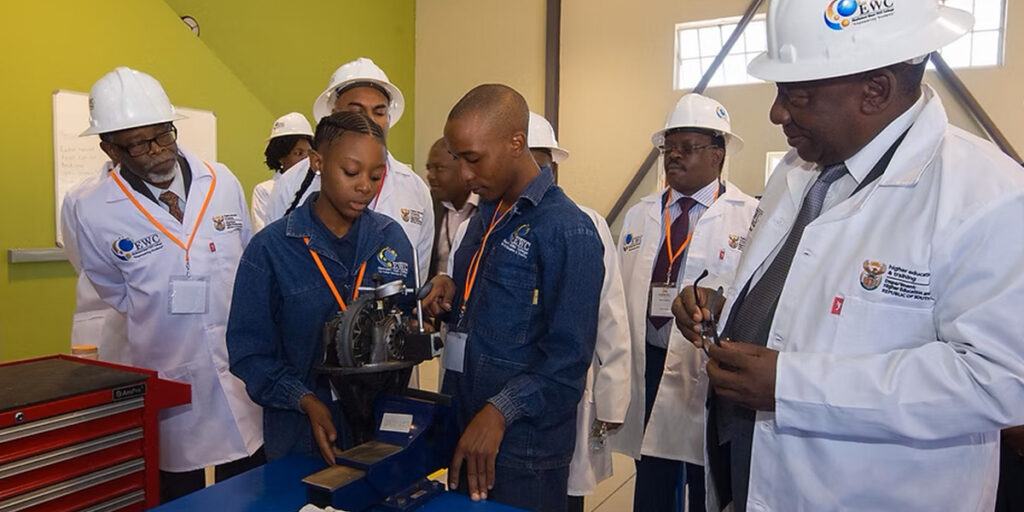
South Africa’s approach to skills development is changing rapidly as government, training institutions and private companies search for better ways to address youth unemployment and prepare young people for the future of work.
For many years, thousands of young South Africans completed matric, certificates, diplomas and degrees but still struggled to find stable employment. One of the biggest reasons has been the growing gap between education and industry demands.
Today, the country’s skills development system is shifting toward practical workplace training, digital skills, technical education and industry-linked learning opportunities that aim to prepare young people for real jobs rather than qualifications alone.
This shift is creating new opportunities for unemployed youth, school leavers, graduates and workers who want to improve their employability in a changing economy.
Why Skills Development Matters in South Africa
South Africa continues to face extremely high youth unemployment levels. Many young people between the ages of 18 and 34 remain unemployed despite actively searching for work.
A major challenge has been that employers often want candidates with workplace experience, while many young job seekers only have classroom-based training.
As a result, there is growing demand for programmes that combine education with practical workplace exposure.
Skills development has therefore become one of the country’s most important tools for:
- Reducing unemployment
- Supporting economic growth
- Building practical skills
- Improving employability
- Preparing youth for modern workplaces
Government departments, employers and training bodies are increasingly working together to create pathways that help young people move from education into employment more successfully.
South Africa Is Moving Towards Practical Skills Training
One of the biggest changes taking place is the move away from purely theoretical learning toward practical, industry-focused training.
Many employers now prioritise candidates who already have:
- Workplace exposure
- Technical skills
- Communication abilities
- Digital literacy
- Problem-solving skills
- Industry certifications
- Trade experience
Because of this, more organisations are offering:
- Learnerships
- Internships
- Apprenticeships
- Work Integrated Learning programmes
- Skills programmes
- Workplace training initiatives
These programmes help young people gain experience while developing industry-relevant skills.
Industries where practical skills are becoming increasingly important include:
- Information technology
- Renewable energy
- Manufacturing
- Logistics and transport
- Construction
- Healthcare
- Agriculture
- Finance
- Retail
- Security services
Young people who gain practical experience often improve their chances of finding long-term employment.
The Growing Importance of TVET Colleges
Technical and Vocational Education and Training colleges are becoming more important in South Africa’s skills development strategy.
For many years, universities were viewed as the main path to career success. However, the labour market is now placing greater value on technical and vocational skills.
TVET colleges help students prepare for careers in areas such as:
- Engineering
- Welding
- Plumbing
- Electrical work
- Automotive trades
- Information technology
- Hospitality
- Office administration
- Business management
- Civil construction
Government has also encouraged stronger partnerships between TVET colleges and employers to improve workplace exposure opportunities for students.
This is especially important because many industries are currently facing shortages of artisans and technical workers.
Fresh listings:






SETAs Continue to Play a Major Role
Sector Education and Training Authorities remain central to South Africa’s skills development system.
SETAs help coordinate and fund programmes that allow learners to gain practical training and nationally recognised qualifications.
These opportunities include:
- Learnerships
- Internships
- Apprenticeships
- Skills programmes
- Workplace placements
- Bursaries
Several SETAs have increased funding for youth-focused programmes as unemployment pressures continue to grow.
Popular SETAs include:
- merSETA
- MICT SETA
- BANKSETA
- LGSETA
- EWSETA
- TETA
- W&RSETA
- CETA
- SASSETA
- Services SETA
Many of these programmes also provide monthly stipends while learners complete training.
Digital Skills Are Becoming Essential
South Africa’s economy is becoming increasingly digital, creating strong demand for technology-related skills.
Young people with digital knowledge are finding growing opportunities in fields such as:
- IT support
- Coding
- Cybersecurity
- Data capturing
- Cloud computing
- Software development
- Digital marketing
- Social media management
- Graphic design
- Artificial intelligence support
Even traditional industries now expect workers to understand digital systems and workplace technology.
This is why many new training programmes include digital literacy components.
Several organisations also offer free or affordable online courses that help young people improve their employability.
Entrepreneurship Is Receiving More Attention
Another major shift is the growing focus on entrepreneurship and self-employment.
Government and development organisations increasingly recognise that not all young people will immediately find formal employment.
As a result, many skills development programmes now include training in:
- Business management
- Financial literacy
- Marketing
- Entrepreneurship
- Digital business tools
- Small business operations
This is particularly important in rural communities and townships where formal job opportunities may be limited.
Young entrepreneurs who develop strong business skills may be able to create sustainable income while also generating employment opportunities for others.
Public Employment Programmes Continue to Expand
South Africa has also expanded public employment initiatives aimed at helping unemployed youth gain workplace experience.
These include opportunities through:
- Expanded Public Works Programme (EPWP)
- Community Works Programme
- Presidential Youth Employment Initiatives
- School assistant programmes
- Municipal training programmes
- Public sector internships
Although many of these opportunities are temporary, they provide valuable work exposure and help young people strengthen their CVs.
For many unemployed youth, these programmes become an important first step into the labour market.
Workplace Experience Is More Important Than Ever
One of the clearest trends in South Africa’s changing skills environment is the growing importance of workplace experience.
Employers increasingly prefer candidates who can demonstrate:
- Professional communication
- Teamwork experience
- Practical understanding of the workplace
- Time management
- Adaptability
- Workplace discipline
This is why internships, learnerships and apprenticeships are becoming more valuable across many industries.
Young people who actively pursue workplace exposure opportunities may improve their long-term employability significantly.
Challenges Still Exist
Despite the positive changes taking place, South Africa’s skills development system still faces serious challenges.
These include:
- Limited programme funding
- High competition for opportunities
- Transport and accommodation costs
- Unequal access in rural areas
- Slow economic growth
- Skills mismatches in some sectors
Many young people also struggle to access accurate information about available opportunities.
This is why reliable platforms that share verified learnerships, internships and training programmes remain important.
Industries Expected to Create Future Opportunities
Several sectors are expected to create increasing demand for skilled workers over the next few years.
Renewable Energy
South Africa’s energy transition is expected to increase demand for:
- Electricians
- Solar technicians
- Engineers
- Maintenance workers
- Project administrators
Technology and ICT
The digital economy continues to grow rapidly, creating opportunities for:
- IT technicians
- Programmers
- Data analysts
- Cybersecurity specialists
- Support technicians
Logistics and Transport
E-commerce and supply chain growth are creating opportunities in:
- Warehousing
- Fleet operations
- Supply chain management
- Transport planning
Construction and Infrastructure
Infrastructure projects may create demand for:
- Artisans
- Site administrators
- Machine operators
- Construction supervisors
Healthcare and Community Services
The healthcare sector continues to require:
- Community health workers
- Caregivers
- Administrative staff
- Support personnel
How Young People Can Prepare
Young South Africans can improve their chances of success by actively building skills and remaining open to learning opportunities.
Helpful steps include:
- Applying for learnerships regularly
- Improving digital skills
- Building a professional CV
- Completing short courses
- Developing communication skills
- Networking professionally
- Volunteering where possible
- Staying informed about opportunities
Consistency is important because competition remains high.
Young people should also avoid scams by applying only through verified organisations and official recruitment platforms.
Final Thoughts
South Africa’s skills development system is changing as employers, government and training institutions place greater value on practical skills, workplace readiness and adaptability.
While unemployment challenges remain serious, the expansion of learnerships, internships, apprenticeships, digital training and technical education is beginning to create new opportunities for young people.
For many South Africans, skills development is no longer only about gaining qualifications. It is increasingly becoming a pathway toward employability, financial independence and long-term career growth.